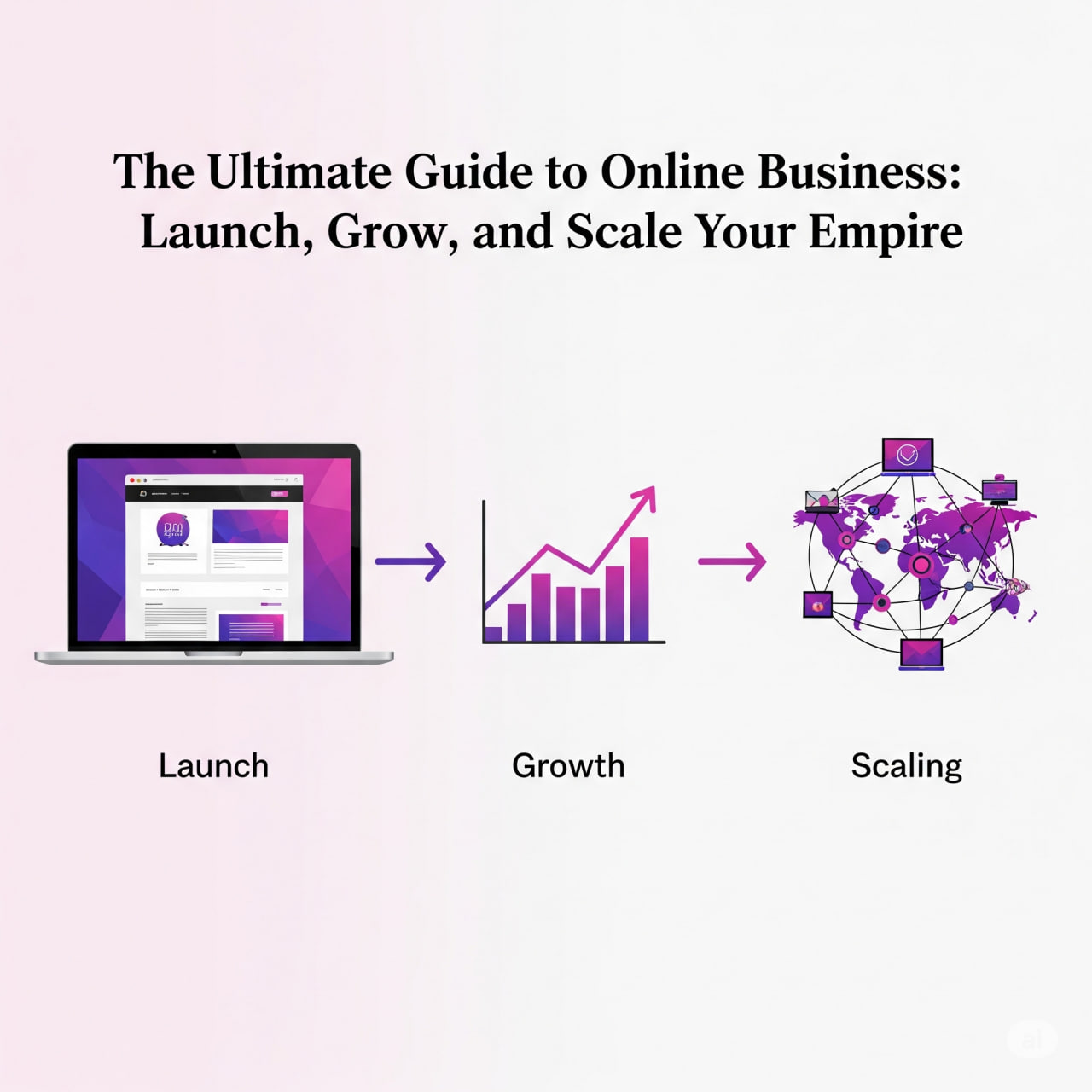
The online business landscape in 2025 is characterized by rapid technological advancements, evolving consumer behavior, and a strong emphasis on personalized experiences. To launch, grow, and scale a successful online empire from scratch, entrepreneurs need to be agile, data-driven, and adept at leveraging AI and automation.
Here’s an ultimate guide to navigating the modern online business world:
I. Launching Your Online Business: The Foundation
1. Idea Generation & Niche Selection
- Identify a Problem to Solve: Successful businesses address a specific pain point or unfulfilled need.
- Leverage Your Passions & Expertise: Building a business around something you genuinely care about increases your motivation and authenticity.
- Market Research (Crucial in 2025):
- Google Trends: Identify rising trends and consumer interest.
- Keyword Research (Semrush, Ahrefs, Google Keyword Planner): Discover what people are searching for and the competition level.
- Competitor Analysis: Analyze existing businesses in your niche. What are they doing well? Where are their gaps? How can you differentiate?
- Surveys & Interviews: Directly ask potential customers about their preferences, pain points, and buying habits.
- Define Your Unique Value Proposition (UVP): What makes your product or service distinctly better or different from the competition? This should be clear, concise, and compelling.
- Consider Profitable Online Business Models:
- E-commerce (Physical Products):
- Dropshipping: Sell products without holding inventory. (See “Dropshipping Domination” for more.)
- Print-on-Demand (POD): Sell custom-designed products (t-shirts, mugs) without managing inventory.
- Wholesale/Retail Arbitrage: Buy products in bulk or at discounts and resell them.
- Private Labeling: Create your own brand of existing products.
- Digital Products: Highly scalable with low overhead once created.
- Online Courses & E-books: Share your expertise.
- Templates & Digital Downloads: (e.g., Notion templates, social media templates, stock photos, fonts).
- Software as a Service (SaaS): Subscription-based software solutions.
- Service-Based Online Business:
- Freelancing/Consulting: Offer your skills (writing, graphic design, web development, marketing, virtual assistance, coaching).
- Online Tutoring/Coaching: Teach or guide individuals in a specific subject or skill.
- Affiliate Marketing: Promote other companies’ products and earn a commission on sales.
- Content Creation & Monetization:
- Blogging: Generate income through ads, affiliate links, or selling your own products.
- YouTube Channel/Podcast: Monetize through ads, sponsorships, and merchandise.
- E-commerce (Physical Products):
2. Business Planning & Legal Setup
- Develop a Lean Business Plan: Outline your mission, target audience, products/services, marketing strategy, operational plan, and financial projections. This is a living document.
- Legal Structure: Choose the right legal entity (e.g., Sole Proprietorship, LLC, Corporation) based on your country’s laws and your liability needs. Consult with legal and tax professionals.
- Business Registration & Licenses: Register your business name and obtain any necessary local, state, or federal licenses/permits.
- Tax Compliance: Understand your tax obligations (income tax, sales tax/VAT) and set up systems for proper record-keeping.
- Intellectual Property Protection: If you have unique products, designs, or branding, consider trademarks or copyrights.
- Website Policies: Create essential legal pages: Privacy Policy, Terms of Service, Refund/Return Policy. Ensure compliance with data protection laws (e.g., GDPR, CCPA).
- Business Bank Account: Keep personal and business finances separate from day one.
3. Building Your Online Presence
- Choose Your Platform:
- E-commerce: Shopify (most popular, easy to use, scalable), WooCommerce (WordPress plugin, flexible, requires more tech skill), BigCommerce (for scaling businesses), Wix/Squarespace (user-friendly website builders with e-commerce features).
- Service/Content-Based: WordPress (highly customizable), Squarespace/Wix (easy drag-and-drop), or a professional portfolio site.
- Website Design & User Experience (UX):
- Mobile-First Design: Most traffic comes from mobile. Your site must be fully responsive and optimized for mobile.
- Clean & Intuitive Navigation: Make it easy for visitors to find what they need.
- High-Quality Visuals: Professional photos and videos are non-negotiable.
- Fast Loading Speed: Crucial for SEO and user retention.
- Clear Call-to-Actions (CTAs): Guide visitors to take the desired action (e.g., “Add to Cart,” “Sign Up,” “Book Now”).
- Personalization: Use AI-powered tools for personalized product recommendations or content suggestions based on user behavior.
- Payment Gateways: Integrate secure and reliable payment solutions (e.g., Stripe, PayPal, Square, local payment options) to offer diverse choices to customers.
II. Growing Your Online Business: Attracting & Converting
1. Digital Marketing Strategies (Key in 2025)
- Search Engine Optimization (SEO):
- Keyword Research: Identify keywords your target audience uses to find products/services like yours.
- On-Page SEO: Optimize product titles, descriptions, meta descriptions, URLs, and image alt text.
- Technical SEO: Ensure your site is crawlable and indexed by search engines (site speed, mobile-friendliness, sitemaps).
- Content Marketing: Create valuable blog posts, guides, videos, or infographics around your niche keywords to drive organic traffic and establish authority.
- Voice Search Optimization: Optimize content for conversational queries as voice search grows.
- Social Media Marketing:
- Platform Selection: Focus on platforms where your target audience spends time (Instagram, TikTok, Facebook, Pinterest for e-commerce; LinkedIn for B2B; YouTube for video content).
- Content Strategy: Create engaging, platform-specific content (short-form videos, carousels, stories, shoppable posts).
- Community Building: Engage with your audience, run contests, and build a loyal community.
- Influencer Marketing: Collaborate with micro or nano-influencers for authentic reach.
- Social Commerce: Integrate direct shopping features into your social media presence.
- Paid Advertising (PPC):
- Meta Ads (Facebook/Instagram): Highly effective for targeted advertising based on demographics, interests, and behaviors. Leverage AI for audience targeting and ad optimization.
- Google Ads (Search & Shopping): Capture demand from users actively searching for your products/services.
- TikTok Ads: Powerful for reaching younger demographics with short-form video.
- Retargeting Ads: Show ads to people who have already visited your website but haven’t converted.
- Email Marketing: (Still one of the highest ROI channels)
- List Building: Offer incentives (discounts, exclusive content) to capture email addresses.
- Automated Sequences: Welcome series, abandoned cart reminders, post-purchase follow-ups (for reviews, cross-sells).
- Newsletters: Regular content, promotions, and updates to keep your audience engaged.
- Segmentation & Personalization: Send targeted emails based on customer behavior, purchase history, and preferences.
- Conversion Rate Optimization (CRO):
- A/B Testing: Test different headlines, images, CTAs, and page layouts to see what converts best.
- Website Analytics: Use Google Analytics to understand user behavior, identify drop-off points, and optimize your sales funnel.
- Social Proof: Display customer reviews, testimonials, trust badges, and security seals prominently.
- Live Chat/Chatbots: Provide instant support and answer common questions to reduce friction.
2. Customer Relationship Management (CRM)
- CRM Software (e.g., HubSpot, Salesforce, Zoho CRM): Centralize customer data, track interactions, manage leads, and automate communication.
- Personalization at Scale: Use AI within CRM to deliver hyper-personalized content, offers, and communication based on customer behavior and preferences.
- Exceptional Customer Service:
- Multi-Channel Support: Offer support via email, live chat, phone, and social media.
- AI Chatbots: Provide 24/7 instant answers to common queries, freeing up human agents for complex issues.
- Self-Service Options: FAQs, knowledge bases, and video tutorials.
- Prompt Responses: Aim for quick resolution times.
- Feedback Loops: Actively solicit and respond to customer feedback to improve your products/services.
III. Scaling Your Online Business: Expansion & Efficiency
1. Automation & AI Integration
- Marketing Automation: Automate email campaigns, social media posting, ad bidding, and lead nurturing.
- Customer Service Automation: AI chatbots, automated responses to common FAQs, ticket routing.
- Operational Automation:
- Inventory Management: Automated reordering based on sales forecasts (especially for e-commerce).
- Order Fulfillment: Integration with suppliers (dropshipping) or 3PL (third-party logistics) for automated shipping.
- Financial Automation: Automated invoicing, payment reminders, expense tracking, and reconciliation.
- AI for Content Creation: Generate product descriptions, ad copy, blog outlines, and social media posts.
- Predictive Analytics: Use AI to forecast demand, identify trends, and personalize customer experiences.
- AI for Visuals: Tools to create or enhance product images, generate lifestyle shots, or even develop brand assets.
2. Optimize Operations & Systems
- Process Documentation: Document every key business process to ensure consistency and facilitate training.
- Outsourcing & Virtual Teams: Delegate tasks that aren’t your core competency (e.g., administrative tasks, graphic design, content writing, specialized marketing) to freelancers or virtual assistants. Platforms like Upwork, Fiverr, and specialized agencies.
- Supply Chain Optimization: If selling physical products, streamline supplier relationships, logistics, and delivery. Consider diversifying suppliers.
- Financial Management: Implement robust accounting software, monitor cash flow, and regularly review financial performance (profit margins, ROI).
- Cybersecurity: Implement strong security measures to protect customer data and your business from threats. Use secure payment gateways, strong passwords, and two-factor authentication.
3. Expansion Strategies
- Product/Service Diversification: Introduce new product lines or services that align with your brand and target audience.
- Market Expansion: Explore new geographical markets or customer segments.
- Omnichannel Strategy: Integrate online and offline experiences (e.g., pop-up shops, local pickup options, in-store online ordering).
- Subscription Models: Offer recurring revenue through subscription boxes, membership programs, or recurring services.
- Strategic Partnerships: Collaborate with complementary businesses or influencers to reach new audiences.
- Affiliate Programs: Create your own affiliate program to incentivize others to promote your products.
4. Funding for Growth
- Bootstrapping: Reinvest profits back into your business.
- Debt Financing: Small business loans, lines of credit (often after proving profitability).
- Equity Financing: Angel investors or Venture Capital (VC) funding for high-growth potential businesses (more common for tech/SaaS).
- Crowdfunding: Raise capital from a large number of individuals (reward-based, equity-based).
- Grants: Government or corporate grants, often for specific industries or social impact.
IV. Continuous Learning & Adaptability
The online business world is constantly evolving.
- Stay Informed: Regularly read industry blogs, attend webinars, listen to podcasts, and follow thought leaders.
- Data-Driven Decisions: Don’t guess. Use analytics to understand what’s working, what’s not, and where to invest your resources.
- A/B Test Everything: Continually test different elements of your website, marketing campaigns, and offerings to optimize performance.
- Embrace New Technologies: Be open to adopting new AI tools, automation platforms, and marketing channels as they emerge.
- Build a Strong Network: Connect with other entrepreneurs, mentors, and industry experts.
- Prioritize Customer Feedback: Your customers are your best source of insights for improvement and new ideas.
Launching, growing, and scaling an online business is a marathon, not a sprint. With a clear vision, a strategic approach, and a commitment to continuous adaptation, you can build a thriving online empire from anywhere.

Leave a Reply